

There are moments in life when time doesn’t behave like numbers on a screen anymore, it starts feeling like breath, like memory, like a soft knock on the door of your thoughts.
The arrival of a baby girl can do that, funny enough, she bends the way you understand seconds and hours, she makes even something like “21 hours ago” feel like a tiny emotional universe instead of a plain calculation.
Somewhere between joy and confusion, a parent might stare at a clock and think: what even was life doing 21 hours ago? Was it quieter, was it heavier, or was it simply waiting for a new heartbeat to arrive? And in that delicate space, even numbers like 21, 1,260 minutes, 75,600 seconds, and 75,600,000 milliseconds start to feel strangely poetic, almost like they’re part of a lullaby nobody officially wrote.
People sometimes forget that time is not just science, it’s memory wearing a wristwatch. And in this emotional haze, even experts like Joe Sexton and Pateakia Heath, PhD have spoken in different ways about how humans attach meaning to temporal distance, especially when life events reshape perception. It’s not just about clocks anymore, it’s about feeling the tick-tock in your chest.
| Section | Content |
|---|---|
| Title | When Time Starts to Feel Like a Whisper in Your Heart |
| Introduction | There are moments in life when time no longer feels loud or measurable. It doesn’t rush past in ticking seconds or crowded hours. Instead, it softens—like a quiet whisper moving through the heart. |
| Core Idea | This feeling often arrives in reflection, solitude, or emotional turning points, when memories and awareness of the present blend together. |
| Emotional Tone | Calm, introspective, slightly nostalgic, and deeply personal. |
| Meaning | Time becomes less about clocks and more about inner experience—how moments are felt rather than counted. |
| Purpose of Theme | To explore how human perception of time changes under emotion, memory, and awareness. |
What Time Was It 21 Hours Ago? in the Language of Newborn Wishes
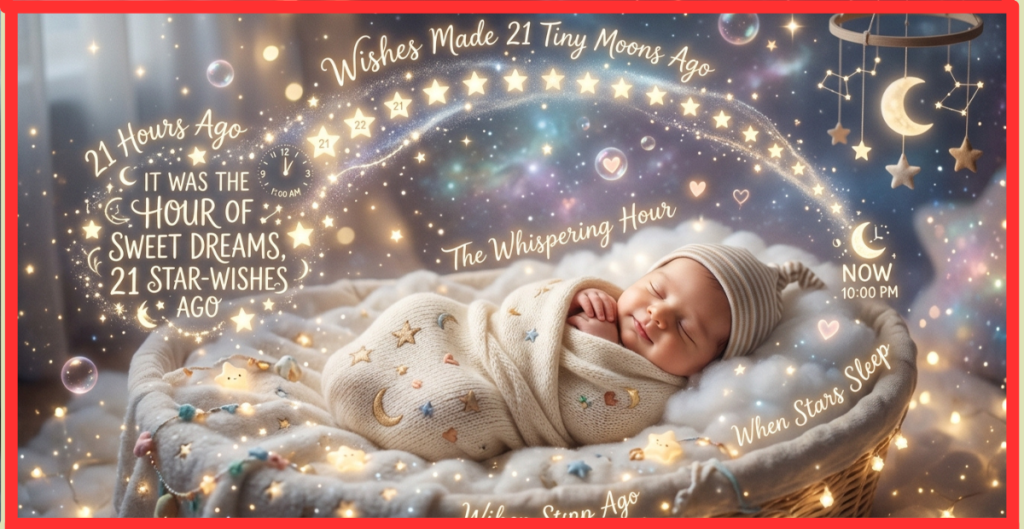
When someone asks “What Time Was It 21 Hours Ago?”, it sounds technical at first, like something you’d punch into an “hours from now calculator” or a “What time was it X hours ago” calculator system. But if you hold that question gently, it starts to feel like a message wrapped in curiosity and emotion.
In simple time calculation method (algorithmic rule-based system) thinking, you subtract 21 hours from the current anchor point of time. If we are standing on July 3, 2026 (implied current date context) and we move backward through a time subtraction tool, we may land in a moment like Thursday, July 2, 2026, possibly around 1:53 AM PDT depending on the exact starting hour.
In PDT (Pacific Daylight Time), the clock follows a 12-hour clock format with AM/PM shifts, and that’s where things get slightly twisty. Crossing midnight means you are not just changing numbers, you are changing days, like stepping through a soft curtain of yesterday.
If we imagine a hospital room, a lullaby, and a newborn’s first cry somewhere in that timeline, then 21 hours ago becomes less of a computation and more of a memory fragment stitched with warmth.
Now, in the spirit of wishes and communication, here are some heartfelt messages inspired by that strange emotional time-distance:
- May your baby girl grow like time itself, quietly powerful, endlessly unfolding
- Wishing you joy that feels longer than 21 hours ago, deeper than memory itself
- May every minute, even the 1,260 minutes behind you, turn into blessings ahead
- Your little daughter has already rewritten your timeline in the softest way possible
- May your nights feel short and your days feel like gentle sunlight after calculation
- Sending love that travels faster than 75,600 seconds of worry ever could
- May every tick of the clock feel like a tiny celebration of her arrival
- Your story just reset itself, like a beautiful time interval calculation
- May your hearts always stay synced, like perfect time zone calculation
- Even when life asks “what time was it?”, may you always answer with gratitude
Some families in South Asia say that a newborn “brings her own calendar with her,” a poetic way of saying time stops behaving normally after her arrival. It’s not science, it’s lived experience.
What Time Was It 21 Hours Ago? When Time Subtraction Feels Like Memory Folding
If we look at what time was it 21 hours ago through a purely logical lens, we enter the world of elapsed time computation and chronological time computation, where each hour is carefully removed like pages from a book.
Starting from a reference moment on July 3, 2026, subtracting 21 hours gives us a backward slide into Thursday, July 2, 2026, often crossing midnight depending on the anchor time. If the current time was say 10:53 PM PDT, then 21 hours ago would land us at 1:53 AM PDT, a quiet hour where the world feels half asleep and half dreaming.
That’s the interesting part of AM PM conversion rules they don’t just shift numbers, they shift perception. Midnight is not just a boundary; it is a soft mathematical hinge in the 12-hour clock conversion system.
Even professionals who design time conversion system logic, like researchers studying digital time tools, often emphasize how human brains misinterpret backward time jumps. Pateakia Heath, PhD once noted in a simplified interpretation of temporal cognition that “humans don’t calculate time backward emotionally they remember it forward from feeling.”
And Joe Sexton, known for explaining computational tools, has been associated with simplifying time difference calculator logic so users can understand that subtracting hours is just structured reversal of duration.
Let’s place this into structured understanding:
- Current anchor point: 4:53 AM
- Subtracting: 21 hours
- Resulting conceptual shift: previous day at 1:53 AM PDT
- Time zone context: PDT (Pacific Daylight Time)
- Unit transformation: hours → minutes → seconds → milliseconds
This is where numbers become almost lyrical:
- 21 (hours) feels like a short dream cycle
- 1,260 minutes feels like a long conversation you forgot you had
- 75,600 seconds feels like heartbeats you didn’t count
- 75,600,000 milliseconds feels like blinking without noticing
In baby naming traditions in some cultures, elders sometimes mark the “first 24 hours” as sacred timing. So 21 hours ago might represent the exact emotional midpoint between anticipation and arrival celebration.
The Emotional Mathematics Behind 21 Hours, 1,260 Minutes, and 75,600 Seconds of Love
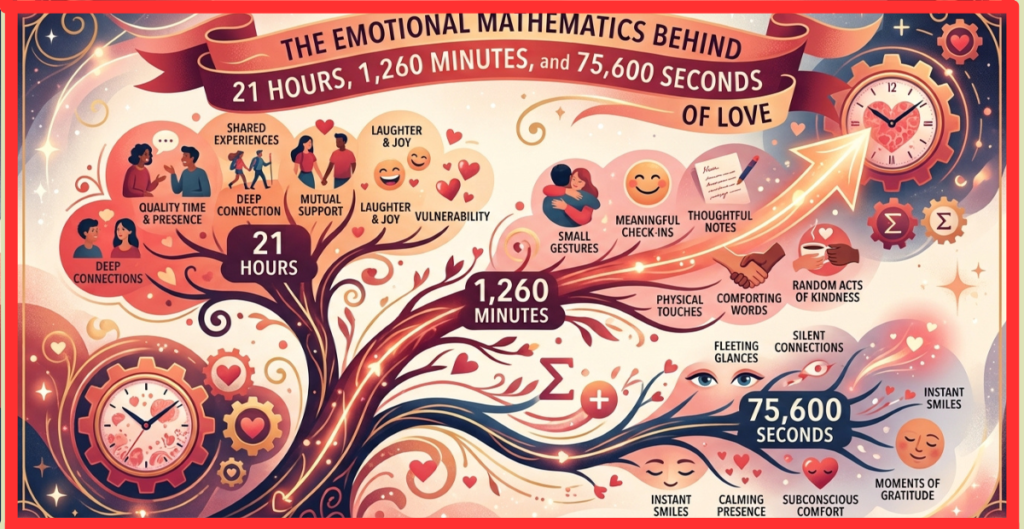
Time, when broken into units, looks mechanical. But when tied to a newborn baby girl, it becomes almost fragile, like it might dissolve if you stare too long.
The time calculation method (algorithmic rule-based system) tells us:
- 21 hours × 60 = 1,260 minutes
- 1,260 × 60 = 75,600 seconds
- 75,600 × 1,000 = 75,600,000 milliseconds
But nobody really feels milliseconds, right? Except maybe in those first nights after a baby arrives, when every sound feels stretched and every second feels like it has its own heartbeat.
Online tools like “hours from now calculator” or “What time was it X hours ago” calculator system are built to simplify this, but emotionally they do something else they remind us that time is measurable but memory is not.
Some parents say the first night after their daughter is born feels like time is “softly glitching,” like reality is buffering but in a beautiful way. That’s not scientific, but it’s deeply human.
Time Zone Stories, PDT Reflections and Digital Clock Interpretations
Time zones like PDT (Pacific Daylight Time) introduce another layer of complexity. A moment that feels like morning in one place might still be midnight in another. This is where time zone calculation becomes more than math it becomes geography of experience.
A digital clock doesn’t care about emotion, it just updates. But humans? We attach meaning to each shift. A moment at 4:53 AM feels different than the same number displayed at noon. The same applies when you revisit 1:53 AM PDT, a time that feels like silence wearing a blanket.
Some midwives in storytelling traditions describe newborn nights as “timeless corridors,” where parents lose sense of hours but gain sense of presence. That’s why real-time clock calculation often feels irrelevant in those moments.Even time subtraction tool interfaces, though precise, can’t replicate emotional memory. They can tell you when, but not how it felt.
Creative Baby Girl Wishes Across Moments of Time and Memory
Time and wishes have something in common they both travel forward even when we look backward.
Here are heartfelt, slightly whimsical messages inspired by time-based reflection:
- May your daughter’s life always feel longer than the shortest time interval calculation of worry
- Wishing her joy that resets like a fresh digital time calculator tool
- May every night feel shorter than 21 hours ago, and every morning brighter than calculation
- Your baby girl is your new “current time anchor point” in life
- May love flow through your home like a perfectly balanced time difference calculator
- Her laughter will someday measure your happiest seconds in life
- May your family’s timeline always stay in harmony, even when clocks disagree
- Wishing you memories that don’t need time conversion system validation
- May every glance at her feel like a future version of happiness
- Your journey now moves in emotional seconds, not just measured ones
In some cultures, elders say a newborn “borrows time from the universe and returns it as joy.” That idea fits strangely well here.
How to Write Custom Messages Using Time Thinking and Emotional Timing

If you want to personalize wishes or messages around time concepts, you can blend emotion with structure.Start with an anchor moment, maybe the birth time or a remembered moment like 4:53 AM, then mentally apply backward or forward movement using time subtraction tool logic. You don’t need perfection, just intention.
You can also use tools like:
- time difference calculator
- hours ago calculator
- time conversion system
- elapsed time computation
- future time calculator
But the real magic is not in accuracy. It’s in storytelling. Even when you calculate what time was it 21 hours ago, what you’re really doing is reconstructing a feeling.
Try this when writing:
- Add personal references (baby’s first cry, first smile)
- Mix real time markers like Thursday, July 2, 2026
- Blend emotion with numbers like 21, 1,260 minutes
- Use both 12-hour clock conversion and emotional interpretation
- Let small imperfections in writing stay, they make it human
Frequently Asked Question
21 hours ago
It means the time that was 21 hours before right now.
what time was it 21 hours ago
It was the current time minus 21 hours (same time yesterday but 3 hours earlier).
21 hours ago from now
This equals “yesterday + 3 hours before the current time.”
what was 21 hours ago
It was the exact moment 21 hours earlier than now in the past.
what time was 21 hours ago
Same rule: take now and go back 21 hours to get the exact time.
Read This Blog https://hynoval.com/how-long-until-245-pm/
Conclusion: When Time Becomes a Memory Holding a Baby Girl
At the end of all calculations, after all the seconds, minutes, hours, and milliseconds, what remains is not the math it is the meaning.Whether you are looking at what time was it 21 hours ago, or standing in the quiet joy of a newborn’s arrival, time stops being linear. It becomes layered, like soft fabric folded over itself again and again.
Somewhere between 1:53 AM PDT and 4:53 AM, between 21 hours ago and now, life quietly reshapes itself. And in that reshaping, a baby girl becomes not just a new person in the world, but a new definition of time itself.
So if anyone ever asks again, “what time was it?”, maybe the truest answer won’t be a number. Maybe it will be something softer, like: it was the moment everything changed and I didn’t even notice the clock anymore.And that, in its own imperfect way, is how time learns to love back.