

Time has a funny habit of sneaking around corners. One moment you’re staring at the Clock, wondering where the day went, and the next you’re trying to figure out what happened several hours earlier.
Maybe you’re checking an old message, tracing a work log, remembering a conversation, or simply feeding a little curiosity that popped into your head while sipping tea.
Whatever the reason, the question “What Time Was It 17 Hours Ago” sounds simple, but it opens a surprisingly interesting door into how humans understand Time, memory, and the strange way our minds travel backward through moments.
I’ve caught myself doing this more times than I’d admit. Looking at the Current Time, then mentally hopping backward, trying to remember where I was, what I was doing, or whether I had already eaten lunch.
It’s a tiny exercise in Temporal Reasoning, yet somehow it feels bigger than basic math. Time isn’t just numbers on a screen; it’s little pieces of life stitched together.
In this guide, we’ll explore exactly how to calculate 17 hours ago, why these calculations matter, how Time Difference Calculation works, and why humans often attach emotions to timestamps and dates.
What Time Was It 17 Hours Ago?
| Current Time | 17 Hours Ago | Date Change |
|---|---|---|
| 2:36 PM | 9:36 PM | Previous Day |
| 9:36 AM | 4:36 PM | Previous Day |
| 12:00 PM | 7:00 PM | Previous Day |
| 6:00 AM | 1:00 PM | Previous Day |
| 12:00 AM (Midnight) | 7:00 AM | Previous Day |
Formula:
Current Time − 17 Hours = Time 17 Hours Ago ✔️
Understanding What Time Was It 17 Hours Ago
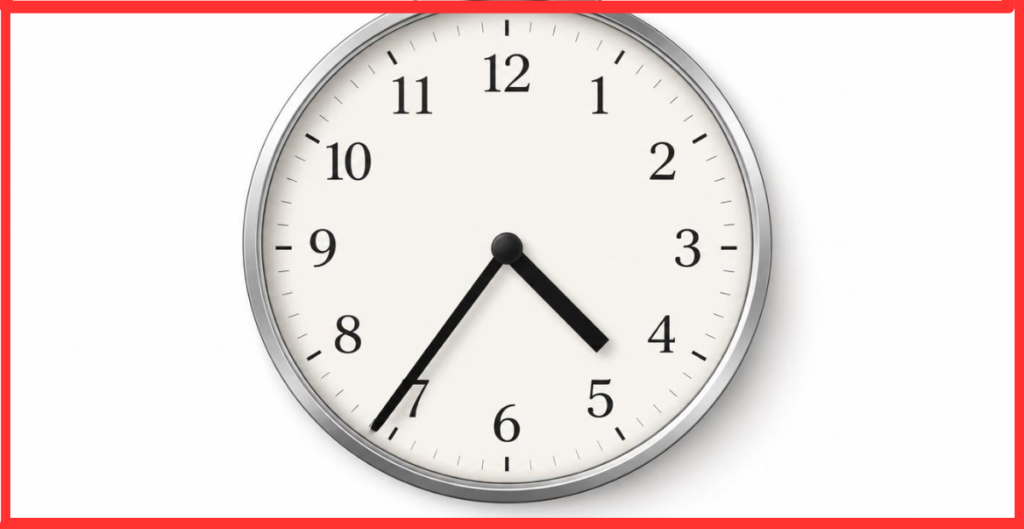
At its core, figuring out what time was it 17 hours ago involves a simple process. You take the Current Time and perform a Subtraction of Hours.
Yet even this straightforward calculation can become slightly confusing when you cross into a different day.
For example:
- If the current time is 2:36 PM, subtracting 17 hours gives you 9:36 PM on the Previous Day.
- If the current time is 9:36 AM, subtracting 17 hours results in 4:36 PM on the previous date.
- If the calculation crosses Midnight, the Date changes as well.
This process is called Time Arithmetic and forms the basis of every hours ago calculator, time difference calculator, and date and time calculator available online.
A little odd perhaps, but our brains don’t naturally perform Chronological Calculation as smoothly as computers do. We often imagine yesterday as one big block instead of a collection of exact timestamps.
The Mathematics Behind 17 Hours Ago
Let’s break down the numbers because numbers tell stories too, just quieter ones.When calculating 17 hours ago from now, we use a simple formula:
Current Time − 17 Hours = Past Time
This type of Arithmetic Calculation belongs to a larger group of calculations known as Date-Time Calculation.
Some useful conversions include:
- 17 hours = 1,020 minutes
- 17 hours = 61,200 seconds
- 17 hours = 61,200,000 milliseconds
These conversions help software systems perform Timestamp Analysis and Past Time Computation.
Imagine a computer system storing events down to the millisecond. It doesn’t think in mornings or evenings. It thinks in timestamps.
That’s why every time conversion tool relies heavily on Time Units and Numerical Conversion behind the scenes.
Humans say, “That happened yesterday evening.”Computers say, “That occurred 61,200,000 milliseconds ago.”Same event. Entirely different language.
What Time Was It 17 Hours Ago in Everyday Life?
Most people don’t search what is 17 hours ago from now because they love math. Usually there’s a practical reason hiding underneath.
Sometimes you’re trying to determine:
- When an email arrived.
- When a package was scanned.
- When a social media post was published.
- When a work shift began.
- When medication was taken.
- When a game update occurred.
In each case, you’re performing a form of Relative Time Calculation.
The interesting thing is that people rarely remember exact timestamps. Instead, we remember events.You might not remember that something happened at 9:36 PM, but you’ll remember that it happened after dinner while watching television. Human memory tends to organize itself around experiences rather than exact numbers.
Working Through a Real Example

Let’s say the Local Time right now is 2:36 PM.
To find 17 hours before now, follow these steps:
- Subtract 12 hours from 2:36 PM.
- This brings you to 2:36 AM.
- Subtract another 5 hours.
- The result becomes 9:36 PM.
Since the calculation passed through Midnight, the answer belongs to the Previous Day.
So:
- Current Time: 2:36 PM
- 17 Hours Ago: 9:36 PM
This is a perfect example of Elapsed Time Calculation and Backward Time Calculation.
Many people get confused because crossing midnight changes both the hour and the date. That tiny detail trips up more calculations than you’d think.
What Happens When Dates Change?
Dates add an extra layer of complexity to Time Difference calculations.
Suppose today is Monday, April 20, 2026.
If the current time is 2:36 PM and you subtract 17 hours, the result becomes:
- 9:36 PM
- Sunday, April 19, 2026
A person checking logs might see the date shift and assume something is wrong. In reality, the math is working exactly as intended.
Similarly:
- Current Date: April 21, 2026
- Current Time: 9:36 AM
- Minus 17 Hours
- Result: 4:36 PM on the previous date
This process is known as Date Calculation and forms an important part of Historical Time Calculation.
What Time Was It 17 Hours Ago Across Different Time Zones?
The answer changes depending on your Time Zone.Someone in Pakistan using Pakistan Standard Time (GMT+5) may get a different result than someone in another part of the world, even if both are calculating at the same moment.
A proper Time Zone Adjustment considers:
- Current local clock time
- Regional offset
- Day changes
- Global time standards
For example, users in GMT+5 often rely on Local Time Zone calculations when scheduling meetings or reviewing activity logs.
That’s why advanced timezone calculator systems perform Time Normalization before displaying results.Without normalization, timestamps can become a complete mess.
I’ve seen meeting invitations somehow appear before they were sent. Time can get weird real fast when zones are mixed up.
Why Humans Are Fascinated by Past Time

The search term 17 hours ago seems practical, yet there’s often an emotional layer underneath.Humans naturally engage in Reflection.
When we calculate a Past Time, we’re sometimes asking:
- Where was I then?
- What was happening?
- Did I miss something?
- How long has it really been?
This connection between Memory and Time Reference creates what some researchers informally call Emotional Timestamps.
A grandmother might remember the exact hour her granddaughter was born.A traveler may remember the moment a plane landed.
A student may remember the timestamp attached to an important acceptance letter.The number itself matters less than the event connected to it.
What Time Was It 17 Hours Ago and Human Memory
Memory doesn’t operate like a database.If I ask you what happened exactly 17 hours ago, chances are you’ll pause. Maybe you’ll reconstruct the answer using clues.You might think:
“I was having dinner.”
Or:
“I was driving home.”
Or perhaps:
“I was scrolling through my phone when I should’ve been sleeping.”
This process demonstrates Time Inference and Human Perception of Time.Our brains build timelines using emotional landmarks rather than exact calculations.
It’s a little messy, honestly, but surprisingly effective.That’s why Nostalgia, Curiosity, and even mild Regret often appear when people revisit earlier moments.
Comparing 17 Hours With Other Time Durations
Understanding how 17 hours fits among nearby durations can help provide context.
18 Hours Ago
- Slightly farther back in the day.
- Often shifts more deeply into the previous evening.
19 Hours Ago
- May move calculations into late afternoon.
- Useful when reviewing activity records.
20 Hours Ago
- Frequently lands near earlier daytime periods.
- Common in monitoring systems and server logs.
Comparing 17 hours, 18 hours, 19 hours, and 20 hours highlights how quickly dates and periods of the day can change.A difference of only a few hours can shift an event from Morning to Evening, creating an entirely different perception.
Online Tools That Help Calculate 17 Hours Ago
Not everyone wants to perform manual calculations.
Several tools can instantly determine:
- time 17 hours ago
- current time minus 17 hours
- calculate past time
- exact past time
- time and date 17 hours ago
- local time 17 hours ago
Popular categories include:
- past time calculator
- hours ago calculator
- time calculator
- time conversion calculator
- date time conversion tools
- clock converter
- online time calculator
These systems automate Temporal Calculation and reduce the chance of human error.Especially after a long day, that’s probably a good thing.
A Practical Scenario in Pakistan

Imagine someone in Pakistan checking activity records.The Local Time is currently 2:36 PM under GMT+5.
To determine what time was it exactly 17 hours ago, they calculate:
- 2:36 PM minus 17 hours
- Result: 9:36 PM
The corresponding date becomes the previous day.
In this case:
- Current Date: Monday, April 20, 2026
- Past Date: Sunday, April 19, 2026
This is a textbook example of GMT+5 time calculation and Regional Time Differences.Whether you’re reviewing business records or simply satisfying curiosity, the principle remains the same.
The Technical Side of Time Processing
Computers treat time very differently than humans.
Systems often store information as:
- Timestamp
- Past Timestamp
- Unix time values
- Millisecond records
Every search for calculate 17 hours ago ultimately relies on technical processes like:
- Date-Time Normalization
- Timestamp Analysis
- Temporal Reasoning
- Chronological Referencing
- Past Time Computation
These systems ensure accuracy even when dates change or users move between global regions.It’s kinda funny. Humans see stories. Computers see numbers. Yet both are trying to describe the exact same moment.
How to Calculate 17 Hours Ago Manually
If you don’t have a calculator nearby, here’s an easy method.
- Identify the Current Moment.
- Subtract 12 hours.
- Subtract the remaining 5 hours.
- Adjust the date if crossing Midnight.
- Verify the AM/PM format.
This simple approach works in almost every situation.
For example:
Current Time = 9:36 AM
Subtract 12 hours = 9:36 PM (previous day)
Add back 7 hours because we overshot? No, instead use direct subtraction:
9:36 AM − 17 hours = 4:36 PM (previous day)
Double-checking your work helps avoid mistakes.
Even seasoned professionals occasionally mix up AM/PM calculations.
Why Questions About Time Never Get Old

Few subjects are as universal as time.
Every person on Earth watches a clock. Every culture measures passing moments. Every family tells stories attached to specific dates.
Questions like:
- what was 17 hours ago
- find the time 17 hours ago
- how to calculate 17 hours ago
- current time minus seventeen hours
- determine past time
appear simple on the surface.Yet they connect mathematics, technology, memory, and human experience in one neat package.That’s probably why people keep searching for them.The answer may be numerical, but the reason behind the question is often deeply personal.
Frequently Asked Question
17 hours ago
17 hours ago refers to the exact time that occurred 17 hours before the current moment. To find it, simply subtract 17 hours from the current time while adjusting the date if the calculation crosses midnight.
Read this blog https://wordzenl.com/how-many-hours-until-2-45-pm-today/
Conclusion
Understanding What Time Was It 17 Hours Ago is ultimately an exercise in both mathematics and memory.
From Time Difference Calculation and Elapsed Time formulas to emotional reflections about where we were and what we were doing, the concept reaches further than many people expect.
Whether you’re using a time difference calculator, performing manual time calculation, checking a past timestamp calculator,
or simply satisfying curiosity, the process remains straightforward: subtract 17 hours from the Present Time and adjust the Date if needed.
Along the way, you’ll encounter concepts like Time Conversion, Time Duration, Local Time, GMT+5, Time Zone Adjustment, and Chronological Calculation.
Yet behind every timestamp sits a human story a memory, a conversation, a laugh, a missed alarm, or a moment worth remembering.
The next time you wonder “what time was it 17 hours ago”, don’t be surprised if the answer leads you somewhere more interesting than a clock.
Sometimes a small calculation becomes a doorway into reflection, and that’s a rather beautiful thing, even if time itself never slows down enough for us to properly thank it.