

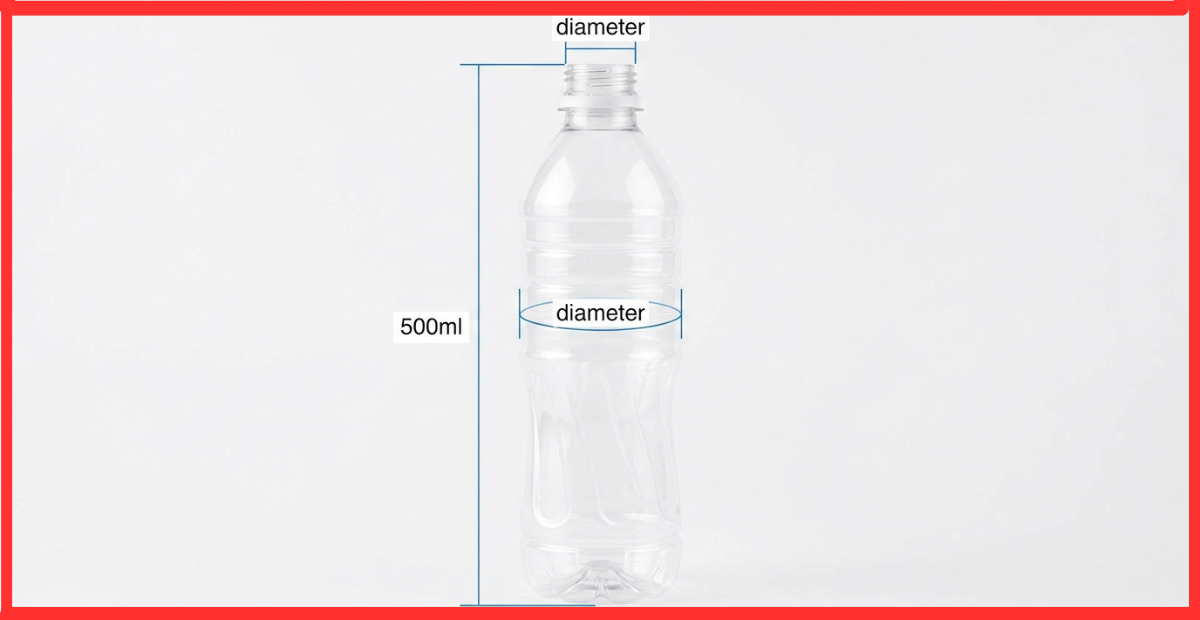
Ever grabbed a water bottle in a rush, stuffed it into a backpack, and then discovered rather rudely that it simply wouldn’t fit? I have. More than once, actualy.
One memorable morning, I stood beside my car, coffee in one hand, oversized bottle in the other, trying to convince a stubborn cupholder that physics was merely a suggestion. It wasn’t.
That tiny moment made me realize how surprisingly important water bottle dimensions really are. We think mostly about color, style, or brand, yet the real magic often hides in measurements:
height, width, capacity, and weight. A bottle that is perfect for hiking may feel awkward at a work desk. A gym bottle might be too large for airline travel. A sleek office bottle may not carry enough water for a long outdoor adventure.
Understanding water bottle size, water bottle measurements, and overall usability can transform your daily hydration routine from mildly annoying to delightfully effortless.
And honestly, hydration already asks enough from us; the bottle shouldn’t become another tiny life complication.
This complete guide explores standard sizes, measurement charts, practical examples, visuals, facts, and expert tips so you can choose the ideal hydration companion for every situation.
| Water Bottle Size | Approx. Height | Approx. Diameter | Best For |
|---|---|---|---|
| 8 oz (237 ml) | 5–6 in (13–15 cm) | 2–2.5 in (5–6.5 cm) | Kids, short trips |
| 12 oz (355 ml) | 6–7 in (15–18 cm) | 2.5–2.8 in (6.5–7 cm) | Everyday use |
| 16.9 oz (500 ml) | 8–8.5 in (20–22 cm) | 2.5–2.8 in (6.5–7 cm) | Daily hydration |
| 20 oz (591 ml) | 9–10 in (23–25 cm) | 2.7–3 in (7–7.6 cm) | Sports & travel |
| 24 oz (710 ml) | 10–11 in (25–28 cm) | 2.8–3.2 in (7–8 cm) | Gym workouts |
| 32 oz (946 ml) | 10–12 in (25–30 cm) | 3.5–4 in (9–10 cm) | Hiking & outdoor use |
| 40 oz (1.18 L) | 11–13 in (28–33 cm) | 3.8–4.5 in (9.5–11.5 cm) | Long trips, all-day hydration |
| 64 oz (1.9 L) | 10–12 in (25–30 cm) | 4.5–5.5 in (11.5–14 cm) | Camping, group use |
Why Water Bottle Dimensions Matter More Than Most People Think
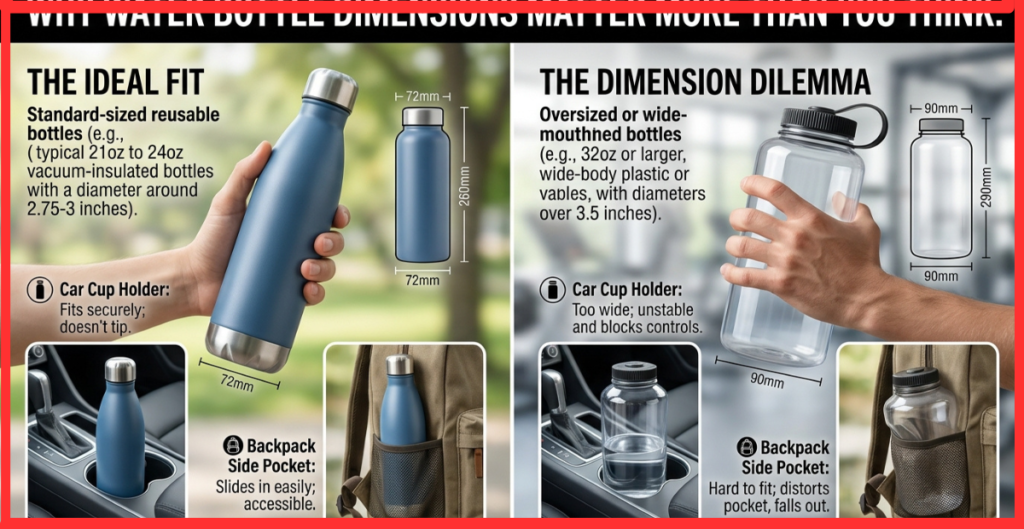
Dimensions influence almost every aspect of bottle usability.
A bottle’s height, diameter, and weight affect:
- Cupholder compatibility
- Backpack compatibility
- Side pocket fit
- Grip comfort
- Travel convenience
- Leak-proof bottle performance
- Everyday carry (EDC) comfort
- Refill frequency
- Overall daily hydration habits
Researchers studying hydration behaviors have repeatedly found that people drink more water when it is easily accessible. A bottle that’s too heavy, too tall, or simply awkward often ends up forgotten in a bag somewhere, which kinda defeats the entire purpose.
Understanding Basic Water Bottle Measurements
Before comparing bottles, it helps to understand common measurement terms.
Water Bottle Height
Water bottle height measures the distance from the base to the top, including or excluding the bottle cap, depending on manufacturer specifications.
Typical heights include:
- 15 cm (5.9 inches)
- 21 cm (8.3 inches)
- 28 cm (11 inches)
- 33 cm (13 inches)
People frequently ask:
- how tall is a water bottle
- how long is a water bottle
- how many inches is a bottle of water
The answer depends entirely on capacity and design.
Water Bottle Width and Diameter
Water bottle width or water bottle diameter refers to the widest section across the bottle.
Common diameters include:
- 5.5 cm (2.2 inches)
- 6.5 cm (2.5 inches)
- 7.5 cm (2.9 inches)
- 10 cm (3.9 inches)
Diameter matters because it determines:
- Hand comfort
- Car cupholder fit
- Bike cage compatibility
- Backpack pocket access
A bottle can be tall yet slim, or short and wide. Humans are funny we’ll tolerate a long meeting but not an uncomfortable bottle grip.
Standard Water Bottle Dimensions
When someone asks, “what is the standard water bottle size?”, they usually mean disposable plastic bottles sold worldwide.
The most common standard water bottle dimensions look something like this.
| Bottle Capacity | Approx Height | Approx Diameter |
|---|---|---|
| 237 ml (8 oz) | 15 cm / 5.9 inches | 5.5 cm / 2.2 inches |
| 355 ml (12 oz) | 18 cm / 7 inches | 6 cm / 2.4 inches |
| 500 ml (16.9 oz) | 21 cm / 8.3 inches | 6.5 cm / 2.5 inches |
| 591 ml (20 oz) | 23 cm / 9 inches | 6.8 cm / 2.7 inches |
| 750 ml (25 oz) | 28 cm / 11 inches | 7.5 cm / 2.9 inches |
| 1 liter (33.8 oz) | 30 cm / 11.8 inches | 8 cm / 3.1 inches |
| 1.5 liter (50 oz) | 33 cm / 13 inches | 9 cm / 3.5 inches |
| 2 liter (67.6 oz) | 33–35 cm | 10 cm / 3.9 inches |
This serves as a practical water bottle dimensions chart and measurement guide.
Water Bottle Dimensions in Inches and Centimeters
Many buyers search specifically for water bottle dimensions in inches or water bottle dimensions in cm.
Quick Conversion Reference
| Inches | Centimeters |
| 2.2 inches | 5.5 cm |
| 2.5 inches | 6.5 cm |
| 2.9 inches | 7.5 cm |
| 3.9 inches | 10 cm |
| 5.9 inches | 15 cm |
| 8.3 inches | 21 cm |
| 11 inches | 28 cm |
| 13 inches | 33 cm |
International brands often list both international measurements, making shopping easier regardless of region.
Standard Water Bottle Dimensions by Bottle Type
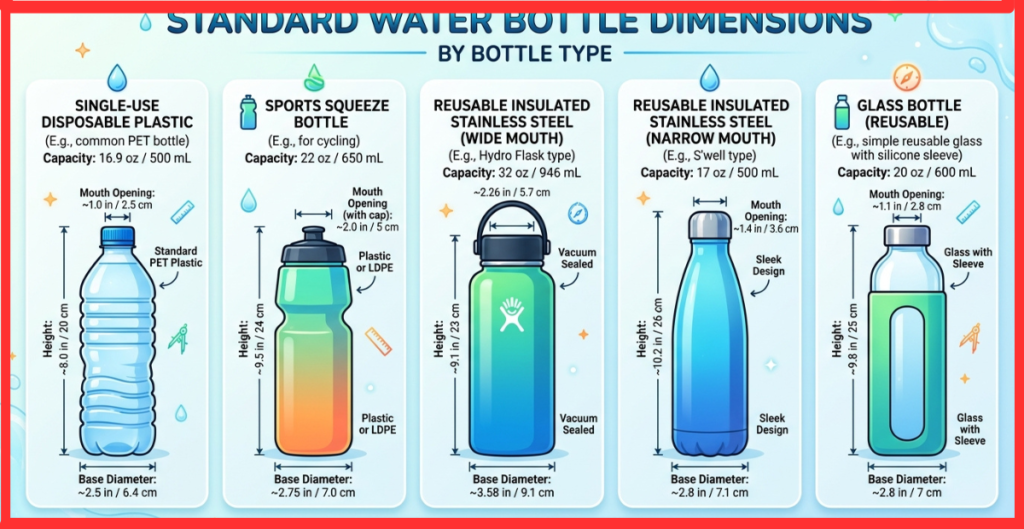
Different designs dramatically alter dimensions.
Classic Cylinder Bottle
The classic cylinder bottle remains the most common shape.
Features:
- Uniform diameter
- Easy storage
- Fits most cupholders
- Excellent portability
Common sizes range from 500 ml to 1 liter.
Sports Bottle
A sports water bottle prioritizes quick drinking.
Characteristics:
- Ergonomic grip zones
- Squeeze-friendly design
- Flip-top or push-button lid
- Moderate diameter
Typical dimensions:
- Height: 22–28 cm
- Diameter: 6–8 cm
Perfect for:
- Gym
- Cycling
- Marathon training
Insulated Bottle
An insulated water bottle contains double-wall construction.
Because of added insulation:
- Exterior diameter increases
- Weight increases
- Temperature retention improves
A stainless steel water bottle with insulation may weigh twice as much as a comparable plastic bottle.
Collapsible Bottle
A collapsible bottle shrinks after use.
Advantages include:
- Lightweight travel
- Air travel convenience
- Space saving
Though honestly, some collapse so enthusiastically they resemble confused jellyfish.
Jug Bottle
Large jug bottles prioritize hydration volume.
Capacities include:
- 1.5 liter
- 2 liter
Ideal for:
- Camping
- Gym sessions
- Outdoor work
Plastic vs Stainless Steel Water Bottle Dimensions
Many people ask: plastic vs stainless steel water bottle—which is better?
Plastic Water Bottle
A plastic water bottle offers:
- Lower weight
- Greater flexibility
- Lower cost
Typical empty weight:
- 15–40 grams (g) for disposable bottles
- 80–180 g for reusable models
Benefits:
- Lightweight
- Affordable
- Easy portability
Modern reusable models often use BPA-free plastic bottle materials.
Stainless Steel Water Bottle
A stainless steel water bottle offers:
- Superior durability
- Better insulation
- Enhanced longevity
Typical empty weight:
- 250–600 g
Benefits include:
- Exceptional stainless steel durability
- Better temperature retention
- Increased lifespan
Tradeoff? Your backpack notices the difference. Quite loudly, somedays.
Water Bottle Size Guide for Everyday Activities
Choosing dimensions should match intended use.
Water Bottle Dimensions for Travel
When selecting travel bottle dimensions, prioritize portability.
Ideal specifications:
- Capacity: 500 ml to 750 ml
- Diameter: under 7 cm
- Height: under 28 cm
A travel water bottle should fit:
- Seatback pockets
- Cupholders
- Carry-on bags
Frequent flyers often prefer slim bottles because airplane seating already feels like an elaborate social experiment.
Water Bottle Dimensions for the Gym
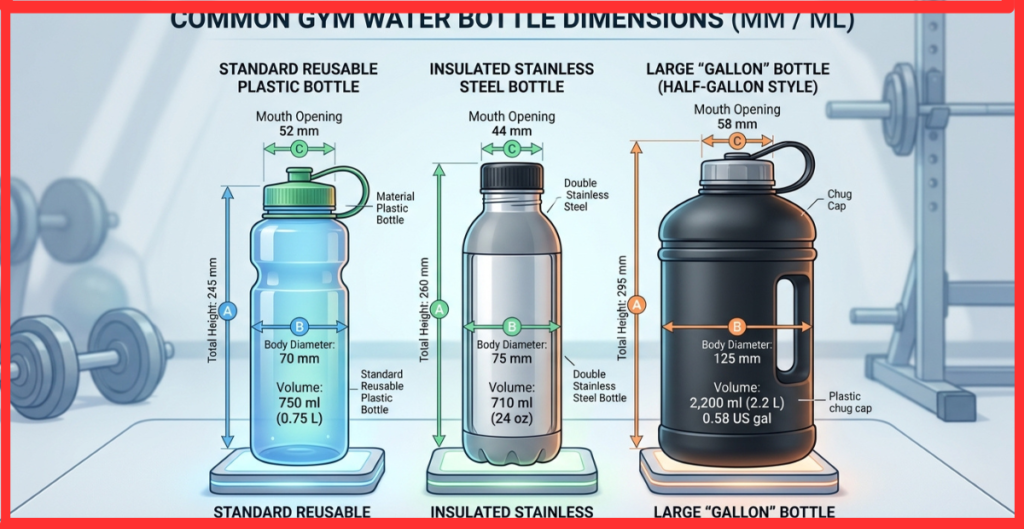
The best gym bottle size depends on workout duration.
Recommended:
- Short workout: 500 ml
- Medium session: 750 ml
- Long session: 1 liter
The answer to what is the best water bottle size for the gym often falls between 750 ml and 1 liter.
A dedicated gym water bottle should include:
- Easy-grip design
- Leak resistance
- Quick-access drinking mechanism
Water Bottle Dimensions for Hiking and Camping
Outdoor adventures demand larger capacities.
For hiking water bottle use:
- Day hike: 750 ml–1 liter
- Extended hike: 1.5 liter or more
For camping water bottle needs:
- 1–2 liters recommended
People often ask:
what is the best water bottle size for hiking
Most hikers prefer 1 liter because it balances weight and hydration needs.
Office and School Bottle Dimensions
An office water bottle should be practical and unobtrusive.
Ideal specs:
- Capacity: 500–750 ml
- Slim profile
- Quiet lid operation
For children, a kids water bottle size generally ranges from:
- 355 ml
- 500 ml
A lunchbox bottle should fit lunch bags without causing mysterious yogurt disasters.
Bottle Size Comparison: Visualizing Common Sizes
Imagine these bottles lined up side by side.
237 ml (8 oz) roughly juice-box sized.
500 ml (16.9 oz) standard store bottle.
750 ml (25 oz) about the height of a hardcover novel standing upright.
1 liter (33.8 oz) substantial yet portable.
2 liter (67.6 oz) large enough that carrying it feels mildly heroic.
This bottle size comparison helps shoppers better understand scale.
Water Bottle Capacity Guide and Volume Conversions
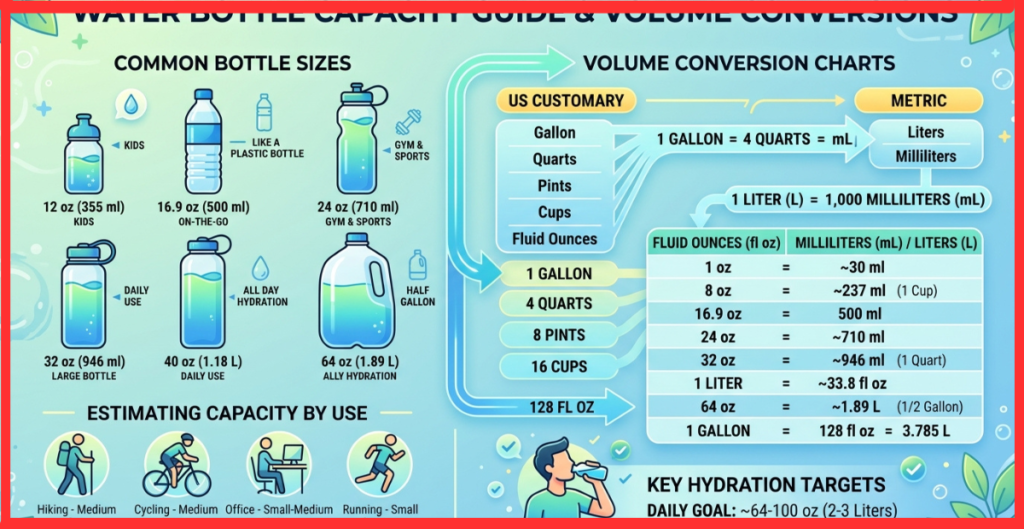
Understanding water bottle volume helps manage hydration goals.
Common Capacity Conversions
| Milliliters | Ounces |
| 237 ml | 8 oz |
| 355 ml | 12 oz |
| 500 ml | 16.9 oz |
| 591 ml | 20 oz |
| 750 ml | 25 oz |
| 1 liter | 33.8 oz |
| 1.5 liter | 50 oz |
| 2 liter | 67.6 oz |
This acts as both an ml to oz conversion and oz to ml conversion reference.
Bottle Weight Guide: Empty vs Full
Consumers often ask:
how much does an empty water bottle weigh
Here is a general bottle weight guide.
| Bottle Type | Empty Weight | Full Weight |
| Disposable plastic | 15–20 g | 515–520 g |
| Reusable plastic | 100–180 g | 600–680 g |
| Stainless steel insulated | 300–600 g | 800–1600 g |
Understanding empty bottle weight and full bottle weight is especially important for hiking and commuting.
Water Bottle Buying Guide: How to Choose the Right Water Bottle
When evaluating bottle dimensions explained in product listings, ask yourself:
Will It Fit My Cupholder?
People frequently ask:
what size water bottle fits a cup holder
Most car cupholders accept bottles up to:
- 7–7.5 cm diameter
Will It Fit My Backpack?
Another common question:
what size water bottle fits a backpack
Most backpack side pockets comfortably hold bottles measuring:
- Diameter: 6–8 cm
- Height: up to 30 cm
Always check water bottle size for backpack compatibility.
Is It Comfortable to Carry?
Consider:
- Grip comfort
- Weight
- Shape
- Intended usage
An ergonomic water bottle encourages consistent use.
Does It Match My Hydration Goals?
If your goal is increasing water intake, choose larger capacities to reduce refill frequency.
If portability matters most, smaller bottles may work better.
There isn’t one perfect size. There is only the bottle that quietly slips into your life and stays there.
Fascinating Water Bottle Facts
Here are a few intriguing water bottle facts:
- Average adults require varying daily fluid intake depending on climate and activity.
- Double-wall bottle insulation can keep beverages cold for over 24 hours.
- Reusable bottles significantly reduce single-use plastic waste.
- Some premium insulated bottles contain vacuum layers thinner than a coin.
- Bottle shape strongly influences perceived comfort and drinking frequency.
- Many cyclists choose bottles based primarily on bike bottle holder compatibility.
- Outdoor athletes often carry multiple bottle sizes during endurance events.
Final Thoughts on Water Bottle Dimensions
Understanding water bottle dimensions, standard bottle measurements, and overall usability can dramatically improve everyday hydration.
Whether you need a compact commuting water bottle, a rugged outdoor water bottle, or an insulated companion for long study sessions, dimensions matter more than many people realize.
The best bottle isn’t necessarily the biggest, lightest, or most expensive. It’s the one that fits your hand, your bag, your lifestyle, and your habits almost effortlessly.
What bottle size do you use every day? Share your experiences, favorite dimensions, or unexpected hydration discoveries in the comments. Sometimes the smallest measurements make the biggest difference.