

Time is funny sometimes. You glance at the clock, answer one message, make a cup of tea, maybe stare out the window for no reason at all, and suddenly the whole day has quietly packed its bags and left.
Then your brain throws a question at you like, “wait… what time was it 16 hours ago?” It’s such a tiny question but it pops up more often than people admit.
Maybe you’re checking a Message Timestamp, figuring out when you last slept, or simply trying to understand your day a little better.
The truth is, calculating 16 hours ago isn’t difficult, but our Human brain has a funny relationship with Time perception.
We remember feelings more clearly than clocks. We remember conversations, coffee getting cold, sunsets, and missed alarms.
Yet when it comes to simple Time subtraction, suddenly everything feels oddly complicated. Kinda strange, isnt it?
In this guide, we’ll explore exactly how to calculate what time was it 16 hours ago, explain the math behind Clock arithmetic, discuss Day rollover, and look at why our minds often struggle with simple Time calculation.
Along the way you’ll also discover practical examples, useful calculators, and some surprisingly interesting facts about how people experience time.
| Current Time | 16 Hours Ago |
|---|---|
| 12:00 AM | 8:00 AM (Previous Day) |
| 4:00 AM | 12:00 PM (Previous Day) |
| 8:00 AM | 4:00 PM (Previous Day) |
| 12:00 PM | 8:00 PM (Previous Day) |
| 4:00 PM | 12:00 AM (Same Day) |
| 8:00 PM | 4:00 AM (Same Day) |
Understanding What Time Was It 16 Hours Ago
Whenever someone asks what time was it 16 hours ago, they’re really asking for a simple Time difference between the Current time and a point in the recent Past time.
The calculation follows a straightforward rule.
Current time − 16 hours = Exact time 16 hours ago
That sounds almost too easy, and honestly… it usually is.
The only thing that changes is whether your calculation remains on the Same day or crosses into the Previous day because of Date rollover. If subtracting sixteen hours pushes the clock past Midnight, then the calendar date changes too.
For example:
| Current Time | 16 Hours Ago |
|---|---|
| 8:00 PM | 4:00 AM |
| 10:00 PM | 6:00 AM |
| 2:00 PM | 10:00 PM (Previous day) |
| 7:00 AM | 3:00 PM (Previous day) |
This is the foundation of all Time arithmetic, whether you’re using a phone, a digital watch, or an online Time calculator.
What Time Was It 16 Hours Ago From Now?
When people search 16 hours ago from now, they’re usually trying to calculate something that happened recently.
Perhaps:
- When was my package scanned?
- When was my last login?
- When did I send that email?
- When did I wake up yesterday?
- What time was my meeting?
Instead of guessing, simply subtract sixteen hours from the Current moment.If the current clock says 9:00 PM, subtracting sixteen hours gives you 5:00 AM.
If the clock says 11:00 AM, the answer becomes 7:00 PM on the Previous day because you’ve crossed Midnight during the calculation.
Little moments like these are where Time reference becomes surprisingly important.
The Mathematics Behind Time Subtraction
Every clock follows rules.
Whether it’s an old analog wall clock or a smartwatch that costs more than your sofa, they’re all using the same mathematical logic.
A basic Time calculation formula looks like this:
Current Time − Hours = Past Time
Behind that simple formula sits a collection of concepts including:
- Subtraction
- Arithmetic
- Hour subtraction
- Time normalization
- Hour underflow
- Hour overflow
- Conditional logic
- Validation
- Time computation algorithm
If subtracting hours produces a negative value, the algorithm simply loops back by adding twenty-four hours and adjusting the Calendar date.
Humans usually do this mentally without realizing it…well, most of the time anyway.
Clock Arithmetic Explained
Clock arithmetic is different from ordinary math.
Normally:
20 − 16 = 4
But clocks cycle continuously.
Imagine the current time is 1:00 AM.
Subtract sixteen hours.
Instead of reaching negative fifteen o’clock (which thankfully doesn’t exist), the clock wraps around to 9:00 AM on the Previous day.
That’s called Time normalization, and every digital clock performs this automatically.
Pretty neat when you think about it.
12-Hour Clock vs 24-Hour Clock
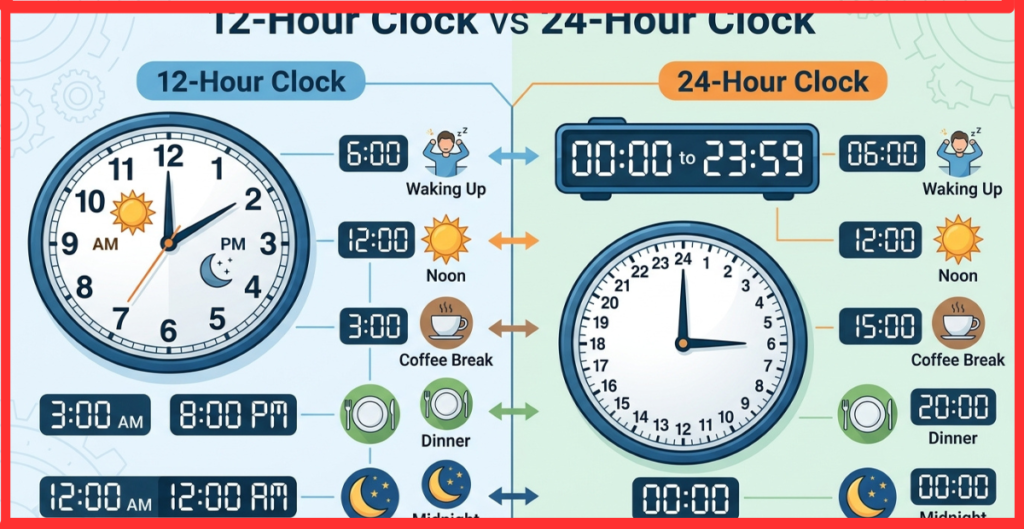
Many countries use different clock systems.
The 12-hour clock uses:
- AM
- PM
Meanwhile the 24-hour clock avoids those labels entirely.
Example:
| 12-Hour Clock | 24-Hour Clock |
| 3:00 PM | 15:00 |
| 8:00 PM | 20:00 |
| 11:00 PM | 23:00 |
| 6:00 AM | 06:00 |
Understanding AM/PM conversion makes Time conversion much easier, especially when performing Current time minus 16 hours calculations.
AM and PM Conversion Made Easy
A surprising number of people mix up Before noon and After noon.
Here’s an easy reminder.
- AM runs from Midnight until just before Noon
- PM runs from Noon until just before Midnight
Whenever your subtraction crosses either point, don’t forget to switch between AM and PM if you’re using the 12-hour clock.
Tiny mistake, huge difference.
Why Day Rollover Matters
The biggest source of mistakes is Day rollover.Imagine today is Sunday, and the current time is 9:00 AM.Subtract sixteen hours.You don’t get 5:00 PM today.You get 5:00 PM on Saturday.
That’s why every good Time subtraction calculator includes Date adjustment alongside the clock calculation.
Ignoring the calendar creates incorrect Exact timestamp results.
Working Through Real Examples
Let’s solve several examples.
Example One
Current time:
8:00 PM
Subtract sixteen hours.
Answer:
4:00 AM
Same calendar day.
Example Two
Current time:
10:00 AM
Subtract sixteen hours.
Answer:
6:00 PM
Previous calendar day.
Example Three
Current time:
5:30 AM
Subtract sixteen hours.
Answer:
1:30 PM
Previous day.
Once you’ve practiced a few times, your Mental math improves naturally.
Well…mostly.
Understanding Time Units
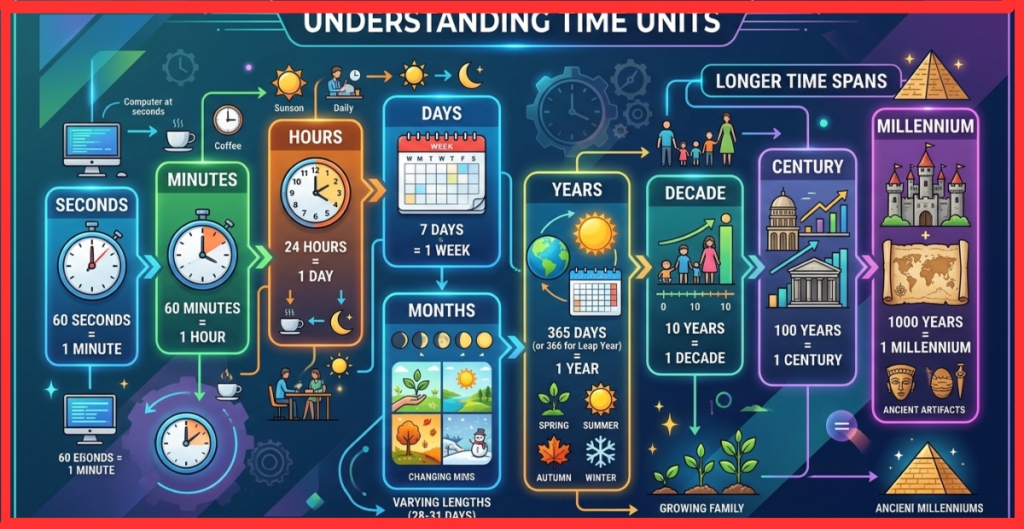
Sixteen hours can also be expressed in other units.
| Time Unit | Value |
| Hours | 16 |
| Minutes | 960 minutes |
| Seconds | 57,600 seconds |
| Milliseconds | 57,600,000 milliseconds |
These conversions are useful in programming, engineering, and precise Time measurement.
Time Zones Can Change Everything
A common mistake is forgetting the Time zone.If someone sends a message from another country, subtracting sixteen hours isn’t enough.You may also need a Time offset.
For example, if you’re using GMT+5, your result may differ significantly from someone using another Local time zone.
That’s why professionals often rely on a Time zone calculator before making international calculations.
Pakistan Time and Local Time
If you’re calculating according to Regional time in Pakistan, your reference generally follows GMT+5.
The calculation itself doesn’t change.Only the starting Local time changes.
Whether you’re checking work shifts, family calls, or travel schedules, always begin with your own Current time before subtracting sixteen hours.
Digital Tools That Make Time Calculations Easy
Today there are dozens of online tools available.
Popular examples include:
- Hours from now calculator
- Time subtraction calculator
- Time difference calculator
- Past time calculator
- Current time calculator
- Elapsed time calculator
- Time conversion calculator
- AM PM calculator
- Time zone calculator
- Online time calculator
- Time conversion tool
- Inch Calculator
- General Calculator
Most perform the Computed result instantly using reliable Clock logic.
No headache required.
Human Perception of Time

Oddly enough, our brains aren’t very good at remembering exact times.
Researchers studying Human thinking and Memory often note that people remember events before they remember clocks.
You might clearly recall laughing with friends, but not whether it happened at 8:17 PM or 8:43 PM.
This gap between reality and Human perception explains why people frequently search when was 16 hours ago instead of calculating it themselves.Sometimes the answer is easy.Remembering to calculate it…eh, that’s another story.
Everyday Situations Where People Calculate 16 Hours Ago
You’d be surprised how often this comes up.
People calculate 16 hours ago when:
- Tracking Last seen activity.
- Reviewing a Conversation history.
- Checking a delivery Timestamp.
- Planning their Sleep cycle.
- Looking through work logs.
- Reviewing security camera footage.
- Organizing Personal communication.
- Managing appointments.
- Comparing Time duration between events.
- Understanding Everyday calculations.
It’s one of those tiny questions that quietly appears almost every day.
Date Adjustment Example
Imagine it’s April 19, 2026 at 9:00 AM.Subtract sixteen hours.Your answer becomes 5:00 PM on April 18, 2026.That’s a textbook example of Date adjustment caused by Hour underflow and Date rollover.
Without changing the date, the answer would be incorrect.
Behind the Scenes: How Computers Calculate Time
Computers don’t actually “understand” clocks.
Instead they rely on structured Algorithm rules.
A typical Time processing routine performs:
- Input Validation
- Time computation
- Hour subtraction
- Time normalization
- Calendar correction
- Final Computed result
Every smartphone follows nearly identical logic when displaying historical timestamps.
Kind of boring maybe…but also pretty brilliant.
Why Exact Time Matters

An Exact time can be important for many reasons.
It helps with:
- Legal records
- Medical documentation
- Business meetings
- Flight schedules
- Banking transactions
- Sports timing
- Technical logs
- Academic research
- Digital Data tracking
- Historical records
Even a difference of one hour can create confusion, especially around Time reference.
Tips for Calculating 16 Hours Ago Quickly
You don’t always need a calculator.
A few habits make it easier.
- Start with the current hour.
- Subtract sixteen.
- If the result becomes negative, add twenty-four.
- Adjust the Calendar date if necessary.
- Double-check your AM/PM conversion.
- Remember Midnight changes the date.
- Practice using both 12-hour clock and 24-hour clock formats.
After doing it a few times, it almost becomes automatic.
Almost.
Frequently Asked Question
16 hours ago
16 hours ago refers to the exact time that occurred sixteen hours before the current moment. You can find it by simply subtracting 16 hours from the current time, remembering to adjust the date if the calculation crosses midnight.
time 16 hours ago
The phrase time 16 hours ago means the specific past time that was exactly 16 hours earlier than now. A time calculator makes this quick and accurate, especially when the calculation involves a previous day or a different time zone.
Read this blog https://yordzenral.com/pokemon-card-art-dimensions/
Conclusion
Calculating what time was it 16 hours ago is really just a matter of simple Time subtraction, but understanding concepts like Day rollover, Date adjustment, Clock arithmetic, and Time conversion makes the process much more reliable.
Whether you’re checking a Timestamp, reviewing a Message, planning around your Sleep cycle, or simply satisfying your curiosity, knowing how to calculate 16 hours ago is a useful everyday skill.
By remembering the relationship between the Current time, the Past time, and your Local time, you can confidently determine the correct answer without second-guessing yourself.
Time keeps moving whether we notice it or not, and sometimes the smallest calculations help us make better sense of our day.
If you have your own shortcuts for working out time 16 hours before now, or a memorable moment when a simple clock calculation saved you from confusion, feel free to share your experience.
Someone else might pick up a handy trick from it, and honestly, that’s how the best little bits of knowledge get passed around.